Can You Install the Best Elevator for a Home Without an Existing Lift Shaft?

Yes, you can install a home elevator even if your house does not have an existing lift shaft. Modern elevator technology offers several options for homeowners who want to improve accessibility, comfort, and convenience without making major structural changes. The right choice depends on your home's layout, available space, number of floors, budget, and installation requirements.
Choosing the best elevators for homes without an existing lift shaft requires careful planning. Whether you live in a duplex, an independent house, or a luxury villa, exploring different elevator designs can help you find a suitable solution for your property.
What Is a Home Elevator Without a Lift Shaft?
A home elevator without a conventional lift shaft is designed to reduce the need for a traditional, fully enclosed elevator well. Depending on the model, it may use a self-supporting structure or a compact installation system.
These elevators can be useful for existing homes where constructing a conventional shaft may be difficult because of limited space or structural restrictions.
However, shaft-free does not mean that no preparation is required. The elevator may still need adequate floor space, suitable structural support, electrical connections, and sufficient headroom. A professional site inspection is essential before selecting a model.
Which Are the Best Elevators for Homes Without an Existing Lift Shaft?
Several elevator options may be suitable, depending on your property's conditions.
1. Shaftless Home Elevators
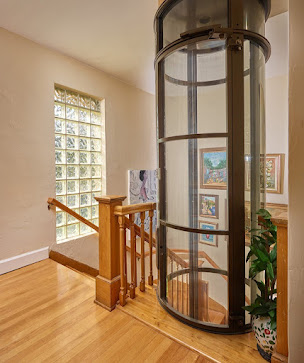
Shaftless elevators are designed for residential spaces where a conventional lift shaft is not practical. Some models use a self-supporting structure and require comparatively limited building modifications.
Benefits:
Suitable for selected existing homes.
Can help reduce major civil construction.
Compact designs may suit limited spaces.
Convenient for moving between residential floors.
Before installation, confirm the model's capacity, safety features, permitted travel height, and building suitability with the manufacturer.
2. Compact MRL Home Elevators
MRL stands for Machine Room-Less. These elevators do not require a separate machine room, making them an option for homes where additional space is limited.
An may still require a dedicated shaft, depending on its design. Therefore, it is important not to confuse a machine-room-less elevator with a completely shaftless system.
Benefits:
No separate machine room.
Efficient use of available building space.
Suitable for various multi-storey residential projects.
Modern cabin and finishing options.
3. Hydraulic Home Elevators
Hydraulic elevators use a hydraulic system to move the cabin between floors. They can be considered for certain residential projects, depending on the building layout and the manufacturer's specifications.
Some installations require a conventional shaft and dedicated equipment space, while others may offer more flexible configurations.
Benefits:
Suitable for selected low-rise homes.
Multiple cabin design options.
Can accommodate different residential requirements.
Always check pit depth, headroom, equipment placement, and structural requirements before making a decision.
What Should You Check Before Installing a Home Elevator?
Before choosing an elevator, evaluate the following factors.
Available space: Measure the area where the elevator could be installed. A staircase corner, unused room, or suitable external location may be considered after a professional assessment.
Number of floors: Confirm how many floors the elevator needs to serve. The number of stops affects the design, travel height, and overall installation cost.
Structural suitability: The building must safely support the elevator and its associated equipment. An engineer or qualified elevator professional should assess the site.
Safety features: Look for appropriate door or access protection, emergency communication, overload protection, emergency lowering or rescue arrangements, and backup power where applicable.
Budget: The final price depends on the elevator type, capacity, number of stops, finishes, civil work, and installation complexity. Request a detailed quotation rather than relying only on an advertised starting price.
Maintenance: Ask about warranty coverage, maintenance schedules, spare parts, and after-sales support before finalising your purchase.
Suggested Read: How Much Space is Required for Residential Elevator?
How Much Space Is Required for a Shaftless Home Elevator?
Space requirements vary by model. There is no single size that suits every house.
The required area depends on the cabin dimensions, the elevator's supporting structure, entry arrangements, travel height, and applicable safety requirements. Pit depth and overhead clearance also vary between products.
For an existing property, an initial site survey can help determine whether a compact or shaftless elevator is feasible. It can also identify any modifications required before installation.
Do not select an elevator based on cabin dimensions alone. The complete installation footprint and access arrangements are equally important.
What Is the Cost of Installing a Home Elevator Without a Shaft?
The cost depends on the selected technology, number of floors, carrying capacity, cabin design, site conditions, and required building modifications.
A shaftless model may reduce certain civil construction expenses, but it is not automatically cheaper than every conventional elevator. Premium finishes, specialised equipment, and complex installation conditions can increase the total cost.
When comparing quotations, check whether the price includes the elevator, installation, electrical work, civil modifications, safety equipment, warranty, and commissioning. This will help you compare different options fairly.
For an accurate estimate, arrange a site assessment and explain your home's layout and requirements.
Related Article: Home Elevator Cost in Delhi 2026 – Full Price Breakdown
Why Choose Attico Elevators for Your Home Lift?
Attico Elevators provides residential elevator solutions for homeowners looking for comfort, accessibility, and modern design. The suitable elevator depends on the property's available space, number of floors, and installation conditions.
When evaluating options, discuss your requirements with the team, including whether your house is already constructed, whether a conventional shaft is available, and how much space can be allocated for the lift.
A professional assessment can help identify suitable options and clarify the work required before installation.
Frequently Asked Questions
1. Can I install a home elevator in an already constructed house?
Yes. Installation may be possible in an existing house, depending on available space, structural conditions, and the elevator model selected.
2. Is a shaftless elevator completely construction-free?
Not necessarily. Some models require limited building modifications, structural support, electrical connections, and suitable floor and overhead clearances.
3. Which elevator is best for a small home?
A compact or shaftless elevator may be suitable, but the best option depends on the available space, number of floors, user requirements, and safety specifications.
4. Do shaftless home elevators require maintenance?
Yes. Regular maintenance and safety inspections are important for reliable operation. Follow the manufacturer's recommended service schedule.
5. How can I find the right elevator for my home?
Start with a site survey. Share the number of floors, available space, building layout, and budget with an elevator professional to receive suitable recommendations.
Conclusion
Installing a home elevator without an existing lift shaft can be possible with the right equipment and planning. Shaftless elevators, compact MRL systems, and selected hydraulic models offer different solutions, but their installation requirements vary.
The best approach is to assess your property's space, structure, budget, and accessibility needs before choosing a model. Contact Attico Elevators to discuss your home lift requirements and explore suitable residential elevator options for your property.
.png)

Comments
Post a Comment